

Peak Power Solar now supplies BYD Battery-Box lithium batteries in Nepal, as an authorized BYD distributor.
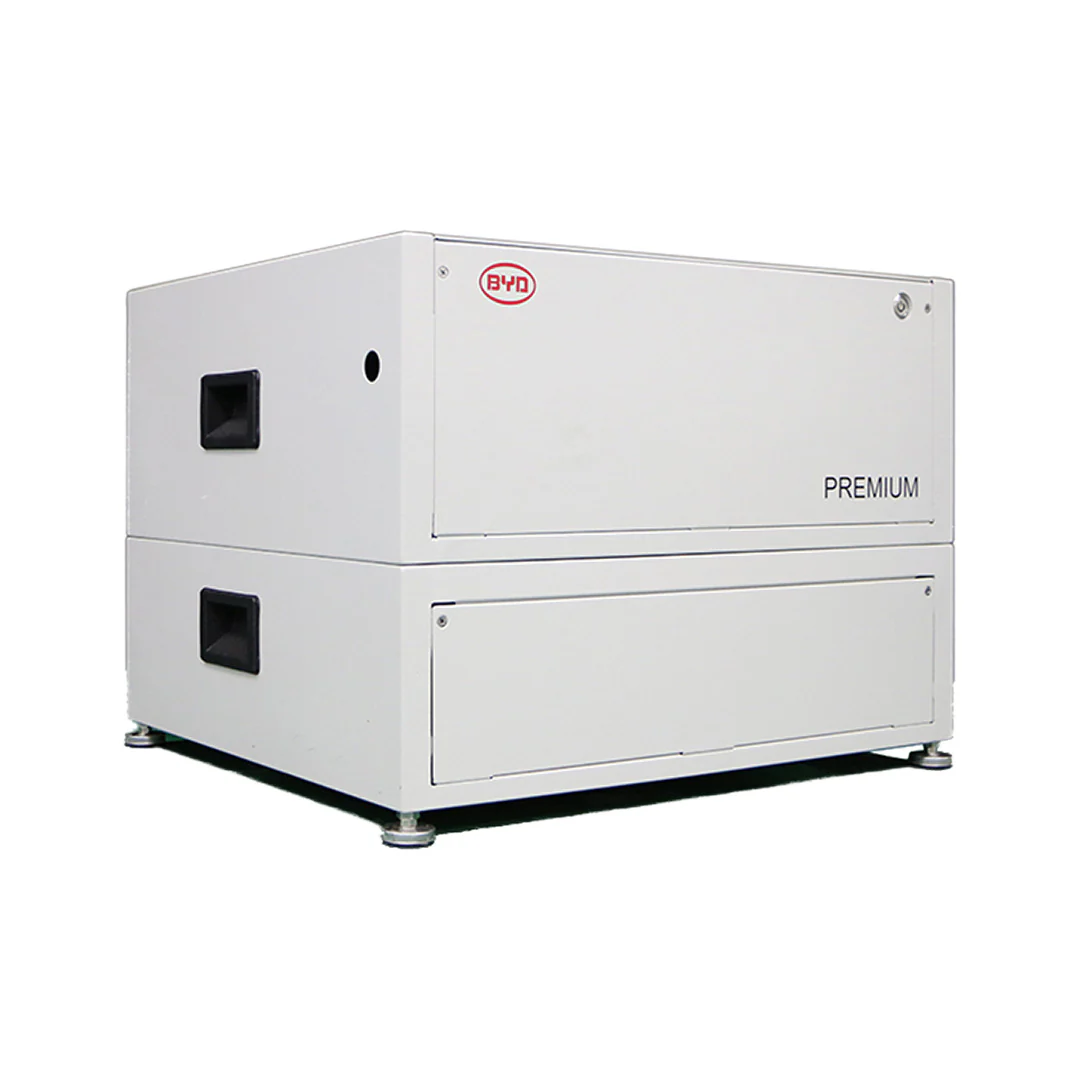
BYD’s Battery-Box range uses lithium iron phosphate (LFP) cells — a cobalt-free lithium chemistry chosen specifically for storage applications because of its safety and cycle life, rather than the energy-dense NMC chemistries used in EVs. A few reasons LFP has become the default choice for stationary solar storage:
- Safety margin. LFP cells are far more thermally stable than cobalt-based lithium chemistries, with a much lower risk of thermal runaway — an important property for battery banks installed inside occupied buildings.
- Cycle life. LFP batteries typically handle several thousand full charge/discharge cycles before capacity drops off, which suits daily solar cycling far better than lead-acid.
- Wide temperature tolerance. The chemistry performs consistently across a broad range of ambient temperatures, relevant across Nepal’s range of installation sites from Terai heat to high-altitude cold.
- Modularity. BYD’s Battery-Box comes in both low-voltage (LVS/LVL) and high-voltage (HVS/HVM/HVL) formats, letting a system start small and scale up later by adding modules rather than replacing the whole bank.
Because BYD batteries pair with an external inverter rather than including one built in, the inverter you choose matters. Peak Power recommends pairing BYD lithium batteries with SMA, Victron Energy, or Fronius inverters — the three inverter brands we’re also an authorized distributor for in Nepal. All three have tested and published compatibility with BYD’s Battery-Box range, which keeps the battery’s warranty and charge/discharge parameters properly matched to the inverter’s charging profile, rather than relying on generic settings.
Get in touch with Peak Power to design a BYD battery system sized and matched to your site.